

Interior Designer Hiring Checklist: Budget, Style & Red Flags You Must Know
Hiring an interior designer is more than just picking someone with a pretty Instagram feed. It is a partnership. You are inviting someone into your personal space to interpret your lifestyle, manage your money, and execute a vision that you might struggle to articulate yourself.
Whether you are renovating a single room or building a custom home, the right designer saves you money and stress. The wrong one can lead to budget blowouts and half-finished projects.
Use this comprehensive checklist to vet candidates, define your budget, and spot the warning signs before you sign a contract.
1. Defining Your Scope & Style (Before You Search)
You cannot hire the right person if you don’t know what you need them to do. Before you send that first email, clarify these two pillars:
Determine the Scope of Work
Full Service: They handle everything—design, ordering, contractor management, site visits, and final installation (“The Big Reveal”).
Design-Only: They provide the floor plans, drawings, and shopping list; you execute the buying and managing.
E-Design: A purely virtual service where you send measurements and they send back a digital plan and retail links.
Consultation: A 2-hour walkthrough to pick paint colors, solve a specific layout problem, or validate your own ideas.
Identify Your Aesthetic
The Visual Audit: Create a Pinterest board or Houzz ideabook.
The Common Thread: Look for patterns. Do you consistently pin light wood and white walls? Do you love dark, moody velvet?
Tip: You don’t need to know the technical name (e.g., “Mid-Century Modern” or “Japandi”). Show them your images; visuals speak louder than jargon.
2. The Budget Breakdown
Talking about money early is crucial. A good designer respects your budget; a great one maximizes it.
Understand Fee Structures
-
Hourly Rate: Best for smaller projects. Ensure there is a cap or a detailed estimate of total hours.
-
Flat Fee: A set price for the entire design scope. Preferred for keeping costs predictable.
-
Cost Plus (Percentage): The designer charges a markup (e.g., 20%) on products they purchase for you.
-
Per Square Foot: Common in new construction or very large renovations.
The “Hidden” Costs Checklist
When setting your budget, ensure you have accounted for:
-
[ ] Design Fees: The designer’s time and expertise.
-
[ ] Furnishings & Materials: The actual items you are buying.
-
[ ] Freight & Delivery: Shipping heavy furniture is expensive (add 10–15% to furniture costs).
-
[ ] Labor: Painters, electricians, wallpaper installers.
-
[ ] Contingency: Always set aside 10-20% for unexpected issues (e.g., finding mold behind a wall).
3. The Interview: Key Questions to Ask
Once you have a shortlist, set up a discovery call. Ask these specific questions to gauge compatibility.
The Logistics
-
“Can you work realistically within my budget of $[Amount]?”
-
“How do you prefer to communicate? (Email, text, weekly meetings?)”
-
“What is your current workload and estimated timeline for a project this size?”
The Process
4. “How do you handle trade discounts? Do you pass them on to me, or do you keep them as part of your fee?”
5. “What happens if I don’t like a design you present?” (Look for a flexible revision policy).
6. “Do you have a preferred contractor, or are you open to working with mine?”
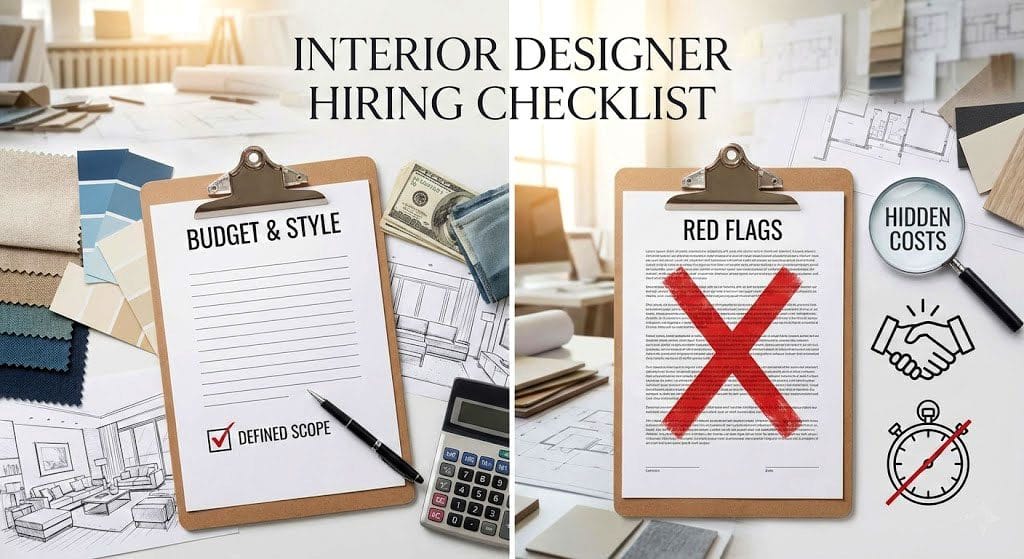
4. The “Red Flags” Watchlist
If you spot these warning signs during the consultation or contract review, walk away.
🚩 Red Flag 1: The “Yes Man”
If a designer agrees with everything you say and offers no pushback or new ideas, they aren’t designing—they are just taking orders. You are paying for their expertise, not just their validation.
🚩 Red Flag 2: They Don’t Listen
Did you say you hate the color orange, and they showed you a terracotta sofa? Did you say your budget is strict, and they proposed a rug that eats up 50% of it? A designer who ignores small details now will ignore big ones later.
🚩 Red Flag 3: Vague Contracts
Never start work on a handshake. A professional contract must clearly outline:
-
Payment schedule (when are deposits due?)
-
Deliverables (what exactly do you get? 3D renders? Floor plans?)
-
Termination clause (how do you break up if it goes wrong?)
🚩 Red Flag 4: The “Ghost”
If they take a week to reply to your initial inquiry, imagine how hard it will be to reach them when your custom cabinets arrive in the wrong size. Responsiveness is a major indicator of project management skills.
5. Final Decision Matrix
Stuck between two designers? Use this quick matrix to decide.
| Factor | Designer A | Designer B |
| Budget Fit | Does their fee leave room for furniture? | |
| Style Match | Do their past projects look like what you want? | |
| Chemistry | Do you like talking to them? (You will talk a lot!) | |
| Transparency | Were they clear about costs and timeline? |
The Bottom Line
Your home is your sanctuary. The right interior designer is a bridge between your dream and reality. By focusing on transparency, clear communication, and defined expectations, you can hire with confidence and enjoy the transformation of your space.
Conclusion
Ultimately, hiring an interior designer is an investment in your quality of life, not just your property value. It is a relationship built on trust, financial transparency, and shared vision. By taking the time to define your scope, ask the hard questions, and heed the warning signs early, you protect your investment and your peace of mind.
A great designer doesn’t just fill a room with furniture; they translate your life into a living space. But to get the result you love, you must first hire the partner you trust.
Prince SinglaSingla Property Developers
Don’t rush the hiring process; the right partner will turn the chaotic journey of renovation into a curated experience, delivering a home that feels authentically yours.”
0 comments