
Architectural Styles Explained: A Journey From Traditional Indian to Contemporary
Explore the fascinating evolution of Indian architecture. From ancient vernacular wisdom and colonial influences to Art Deco and cutting-edge sustainable contemporary designs, get architectural styles explained simply.
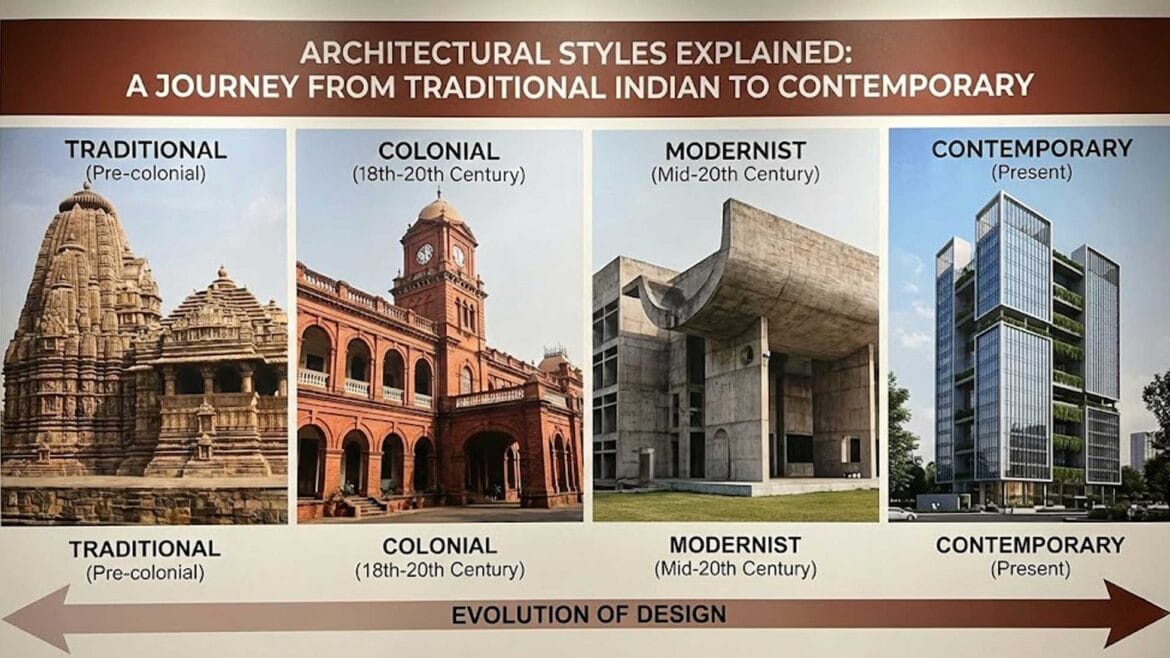
Architecture is more than just shelter; it is the physical manifestation of a culture’s history, climate, beliefs, and aspirations. In a country as diverse as India, the architectural landscape is a rich tapestry woven over millennia. Walking down a street in a major Indian city, you might encounter a centuries-old temple, a Victorian-era railway station, an Art Deco cinema, and a sleek glass high-rise—all within a few kilometers.
For homeowners, design enthusiasts, and history buffs, understanding these styles provides a deeper appreciation of the built environment. This guide will have key architectural styles explained, tracing the fascinating timeline from India’s traditional roots to its contemporary present.
1. The Roots: Traditional and Vernacular Indian Architecture
Before globalization and industrial materials, architecture was intensely local. Vernacular architecture refers to styles that evolved naturally based on local climate, available materials, and cultural needs. These structures were sustainable by necessity, long before “green building” was a buzzword.
Key Characteristics:
- Climate Responsiveness: In the hot, arid North (Rajasthan, Gujarat), thick stone walls and small windows kept interiors cool. In the humid South (Kerala), steeply sloping tiled roofs handled heavy monsoon rains.
- Local Materials: Usage of laterite stone in coastal areas, bamboo in the Northeast, and timber and mud in central India.
- The Courtyard Home: Perhaps the most ubiquitous element across India—from the Haveli in the north to the Nalukettu in Kerala. The central courtyard provided ventilation, light, and a private communal space for the joint family.
- Vastu Shastra: Ancient Indian texts on design principles integrated architecture with nature, geometric patterns (mandalas), and directional alignments to ensure harmony and prosperity.
Tip: Homeowners today are increasingly looking to integrate vernacular wisdom into modern homes to improve energy efficiency naturally.
2. The Imperial Imprint: Colonial Architecture (The British Raj)
The arrival of European powers, particularly the British, drastically shifted the architectural narrative. Architecture became a tool for projecting power and authority. However, rather than simply transplanting English styles, a fascinating hybrid emerged.
Key Styles:
- Neoclassical: Used primarily for early government buildings and town halls. It featured grand columns, symmetry, and pediments inspired by ancient Greece and Rome, meant to convey order and stability.
- Indo-Saracenic Revival: This is the most iconic style of the Raj. British architects, fascinated by Mughal and Hindu architecture, blended Victorian Gothic forms with Indian elements.
- Features: Bulbous domes, chhatris (elevated, dome-shaped pavilions), overhanging eaves, pointed arches, and clock towers.
- Examples: The Chhatrapati Shivaji Maharaj Terminus (CSMT) in Mumbai and the Victoria Memorial in Kolkata.
3. The Glamour Age: Art Deco in India
Between the two World Wars, a new wave of modernity swept through India’s port cities. Art Deco represented glamour, luxury, and a break from tradition.
Mumbai (then Bombay) became the epicenter of this movement, today hosting the second-largest collection of Art Deco buildings in the world after Miami.
Key Characteristics:
- Geometric Forms: Stepped setbacks (ziggurat style), chevrons, and sunburst motifs.
- Nautical Elements: Porthole windows and rounded corners, resembling ocean liners.
- Cinema Halls and Apartments: The style was popularized in the design of new movie theaters and the rising trend of apartment living in coastal cities.
4. Nation Building: Modernist Architecture (Post-Independence)
After gaining independence in 1947, India sought a new identity, free from the colonial past. Prime Minister Jawaharlal Nehru invited legendary architects like Le Corbusier and Louis Kahn to help shape modern India. This era prioritized function, honesty of materials, and social progress.
Key Characteristics:
- Brutalism: A style characterized by raw, unfinished concrete (béton brut), monumental forms, and a focus on functionality over decoration.
- The Chandigarh Experiment: The city of Chandigarh, designed by Le Corbusier, is the ultimate example of modernist urban planning and architecture in India, featuring grid layouts and concrete administrative buildings.
- Form Follows Function: Buildings were designed based on their purpose, stripping away necessary ornamentation.
5. The New Wave: Contemporary Indian Architecture
Contemporary architecture is difficult to define because it is the style of “now.” It is fluid, experimental, and globally influenced. However, in India, a distinct contemporary language is emerging that blends modern technology with a renewed respect for traditional roots—often termed “Critical Regionalism.”
Today’s best architects are moving away from the generic glass-box aesthetic towards something more meaningful.
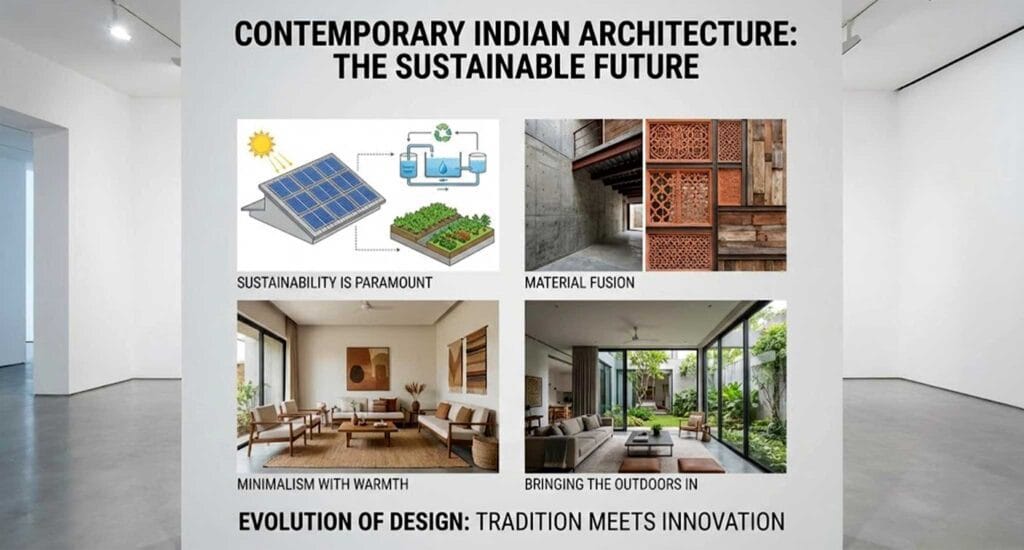
Key Trends in Contemporary Design:
- Sustainability is Paramount: It’s no longer an add-on; it’s the core of design. This includes solar passive design, water recycling, and green roofs.
- Material Fusion: A beautiful juxtaposition of raw concrete or steel beams alongside traditional materials like terracotta jaalis (lattice screens), reclaimed wood, or exposed brick.
- Minimalism with Warmth: Clean lines and open floor plans, inspired by global minimalism, but warmed up using textured fabrics, local art, and earthy color palettes suitable for the Indian climate.
- Bringing the Outdoors In: Massive glazing walls that blur the boundary between the living room and the garden, a modern interpretation of the traditional courtyard concept.
Conclusion: Finding Your Aesthetic
Understanding these architectural styles is not just an academic exercise. It helps you identify what resonates with you.
Architecture is the silent historian of our time; it speaks of where we have been, embraces where we are, and shapes where we are going — forever balancing the wisdom of the past with the innovation of the future.
Prince SinglaSingla Property Developers
Are you drawn to the intricate details of a traditional Haveli, the symmetrical grandeur of a colonial structure, or the clean, eco-conscious lines of contemporary design? Perhaps your ideal home is a blend—a modern structure that utilizes ancient Vastu principles and local stone.
By recognizing the characteristics of these eras, you can better appreciate the buildings around you and make informed decisions when building or renovating your own space.
0 comments