
How to Build a Sustainable Home: Tips and Tricks
As awareness of environmental issues grows, more homeowners and builders are seeking ways to create eco-friendly, sustainable residences. Building a sustainable home not only reduces your carbon footprint but also results in long-term savings and a healthier living environment. Here are some essential tips and tricks to guide you on this green journey.
1. Solar Power Integration: Tapping into Renewable Energy
One of the most effective ways to reduce reliance on fossil fuels is by incorporating solar energy systems into your home. Solar panels can generate clean electricity, significantly lowering energy bills and decreasing greenhouse gas emissions.
Tips for successful integration:
- Position panels to maximize sun exposure, typically south-facing in the Northern Hemisphere.
- Consider solar water heaters for hot water needs.
- Explore options for battery storage to ensure power availability during cloudy days or at night.
Harnessing the sun’s power is a cornerstone of sustainable design and can make your home energy-neutral.
2. Rainwater Harvesting: Conserving Water Resources
Collecting and utilizing rainwater reduces dependence on municipal water supplies and eases strain on local water systems. Rainwater harvesting systems can be as simple as gutters and storage tanks or as sophisticated as integrated filtration systems.
Benefits include:
- Reduced water bills
- Support for irrigation, flushing toilets, and other non-potable uses
- Enhanced resilience during droughts or water restrictions
Properly designed systems ensure water quality and sustainability, making your home more self-sufficient.
3. Energy-Efficient Insulation: Cutting Heating and Cooling Costs
Good insulation is vital for maintaining a comfortable indoor environment with minimal energy consumption. Modern, eco-friendly insulation materials—such as cellulose, sheep’s wool, or recycled denim—offer high thermal performance with a lower environmental impact.
Tips:
- Insulate walls, roofs, and floors thoroughly.
- Use airtight construction to prevent drafts.
- Consider thermal mass elements like concrete or stone to regulate indoor temperatures.
Effective insulation reduces the need for heating and cooling, saving energy and money over the long term.
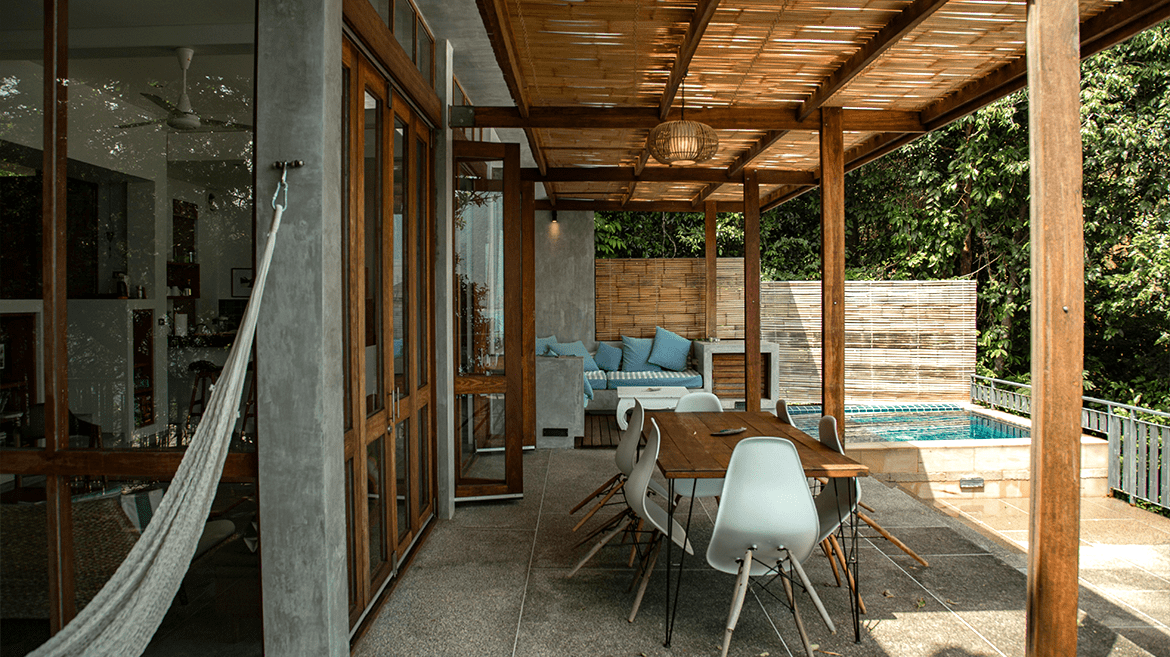
4. Eco-Friendly Materials: Using Recycled, Bamboo, or Low-Impact Products
Choosing sustainable materials is fundamental to green building. Recycled steel, bamboo, reclaimed wood, low-VOC paints, and low-impact concrete are excellent options that minimize environmental harm.
Advantages:
- Reduced resource depletion
- Lower embodied energy
- Less toxic emissions indoors
Opting for eco-friendly materials supports a healthier home environment and promotes sustainable manufacturing practices.
5. Passive Design Strategies: Maximizing Natural Light and Airflow
Passive design leverages natural elements to control indoor climate, reducing reliance on mechanical heating, cooling, and lighting. Techniques include orienting the building to maximize sunlight, designing windows and vents for optimal airflow, and incorporating shading elements.
Strategies include:
- Positioning windows to capture winter sunlight and shade in summer
- Using cross-ventilation to promote cooling
- Incorporating shading devices like overhangs or pergolas
By intelligently designing your home’s layout, you can enjoy a comfortable living space with minimal energy consumption.

Embracing Sustainability for a Better Future
Building a sustainable home is an investment in both the environment and your quality of life. By integrating renewable energy, conserving water, choosing eco-friendly materials, and designing intelligently, you create a residence that is resilient, cost-effective, and harmonious with nature.
The future of architecture lies in designs that think, breathe, and adapt — creating spaces that nurture both humanity and the planet.
Prince SinglaSingla Property Developers
Through mindful choices and innovative practices, you can build a home that not only meets your needs but also contributes to a healthier planet for generations to come.
0 comments